Print and Play (PnP) board games refer to games that are published in a format that allows players to build their own games: cards, token, dice etc rather than buying a complete retail box from a local game store or online.
Some games are published as both: a PnP version for those who want to do some arts and crafts and a retail version for those who want a more polished and ready-to-play version. Others just publish print and play versions because they are not interested in getting into traditional board game publishing but rather enjoy the game design part of it.
Print and Play can be an availability thing too: depending on where people live, they have different level of access to board games. It can be a way to save environment, cost and customs costs. Others enjoy the process of crafting their own pieces and prefer Print and Play option over traditional. It’s also often seen in crowdfunding campaigns where the game is provided to backers as PnP once the campaign ends so players get to play it immediately before the final production is finished and shipped.
Cards
When it comes to printing your own cards and tokens, you get to choose the level of polish: the easiest version is to just print cards on regular printing paper, cut and play. Personally, I like to print to regular paper (80g/m²) and then sleeve to opaque sleeves with an extra card slid in. I have hundreds of extra Pokemon TCG online unlock cards and energies which are perfect for this.
Board Game Projects Youtube channel has a video where they print cards on heavier paper (199g/m²) and then use laminate sheet (but not a laminator) to make cards. Rachel Bruner uses a similar laminate method. Board Game Blitz prints on 176g/m² paper and uses laminator. One more option with lamination by Print and Play Hideaway. James Ernest has a video showing three different ways: junk TCG card with regular print paper, printing on cardstock and rounding corners, and sticker paper to existing playing cards.o
Print and Play files come in many form and shape. Sometimes they come as sheets of A4/Letter pages that you print and they have cut guides. Sometimes you have a pile of individual files. I have built a Playtest Printer to help me print individual images, either for Print and Play projects or personal prototyping or proxying.
Tokens
There are many ways to craft different types of tokens.
Sometimes I just make them into cards, especially if they don’t need to form any kind of regular shape.
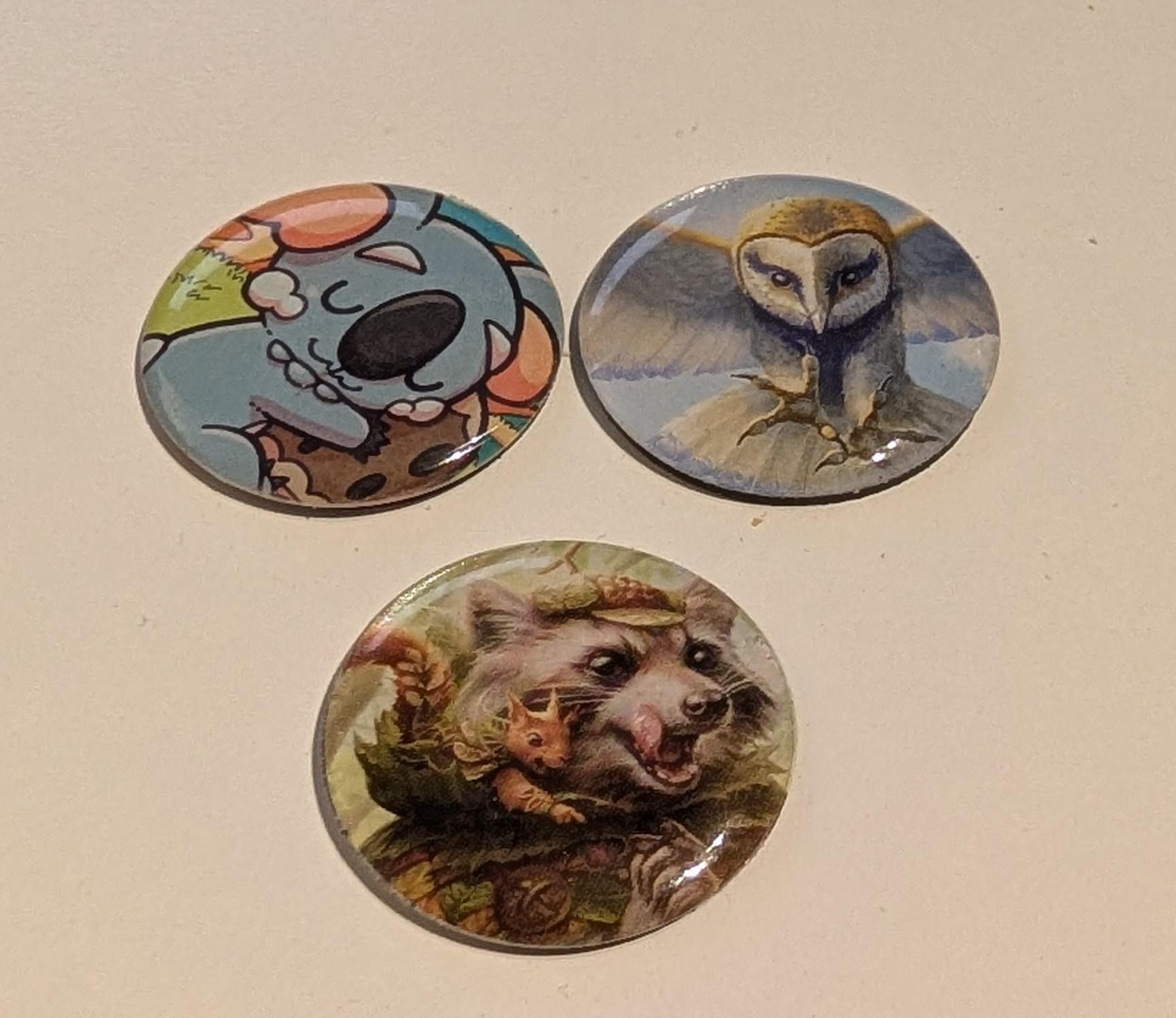
I also have the tools (hole punch, magnetic bases and acrylic tops) to follow JP Coovert’s D&D token tutorial. They look amazing (for these, I used some extra Pokemon TCG and Magic the Gathering cards). The tops that I use are slighly rounded on the top so they can’t stack on top of each other. If stackability is important to you, make sure to use something with even top.
Dining Table Print & Play has a video about making your own cardboard tokens where he goes through a couple of options for single and double sided tokens as well as wooden tokens.
Where to find games?
Some good places to find PnP games are PNPArcade, PnP Paradise and my favourite, BoardGameGeek’s Design Contest forums where you can find new designs with various interesting constraints for game design.
Game storage options
One great way to store and display your PnP games is to use C Cassette cases to store them.
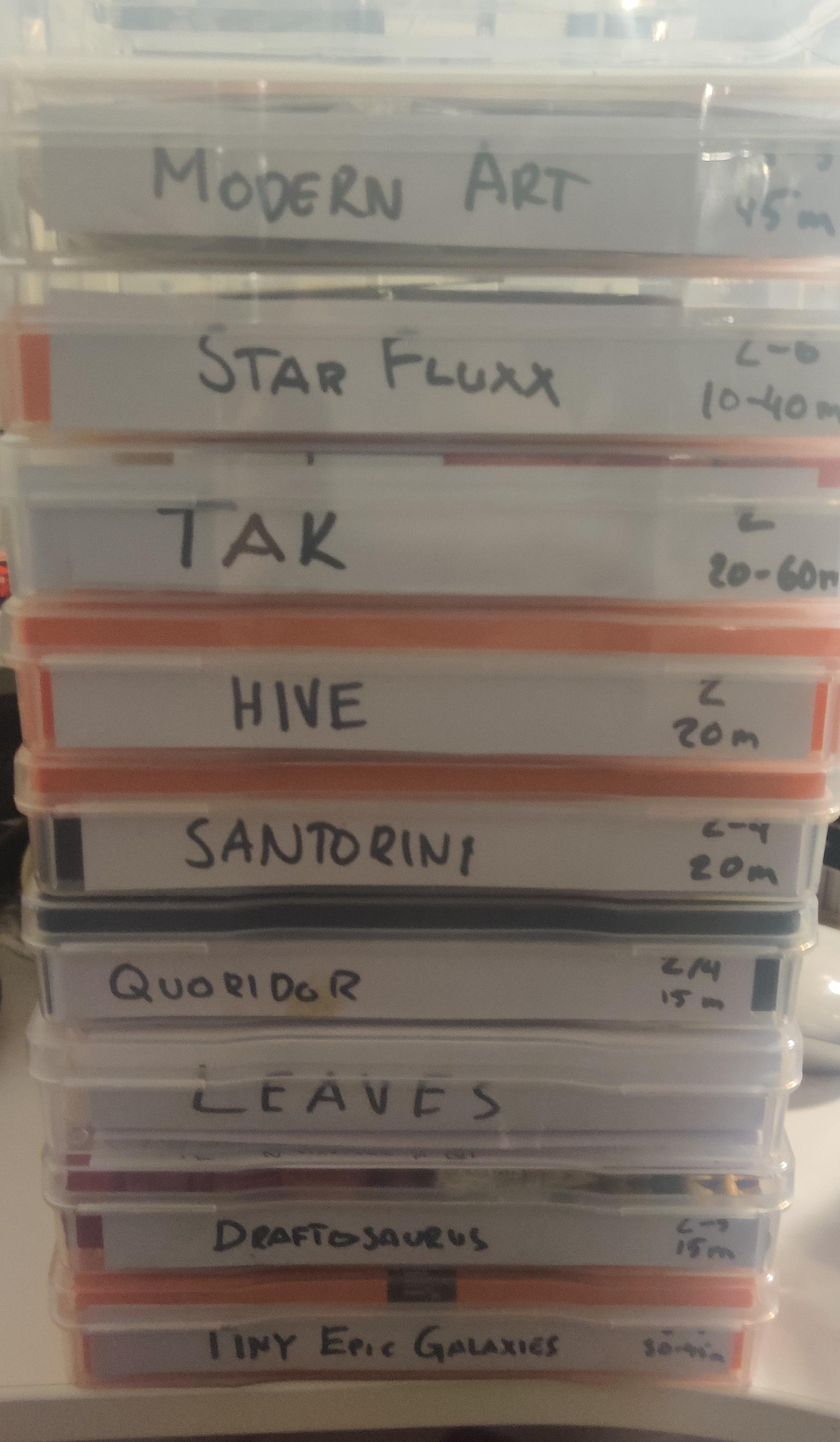
I also love these 16 pack 4”x6” photo keepers (there are many more from different manufacturers) as they allow storing small games and you can store them in one big box like I’m doing: