Onitama
It all started with Onitama, a chess-esque two player abstract strategy game.
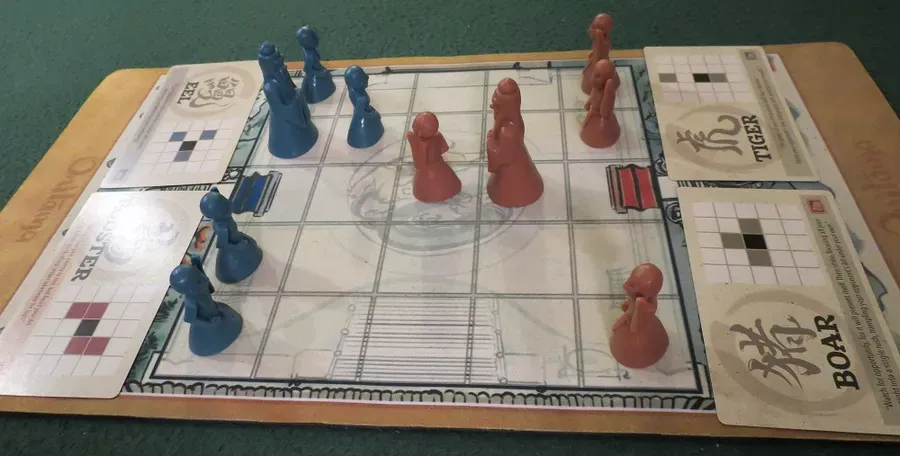 Photo by Daniel Thurot at BoardGameGeek, CC BY-SA 3.0
It’s a beautiful game where you control a group consisting of an onmyo pawn and four puppet pawns on a battle field of 5x5 grid. Instead of the pawns themselves having special rules for movement, all movement is controlled by cards. Each game, 5 cards are selected for the game and they rotate from one player to another as they use the moves.
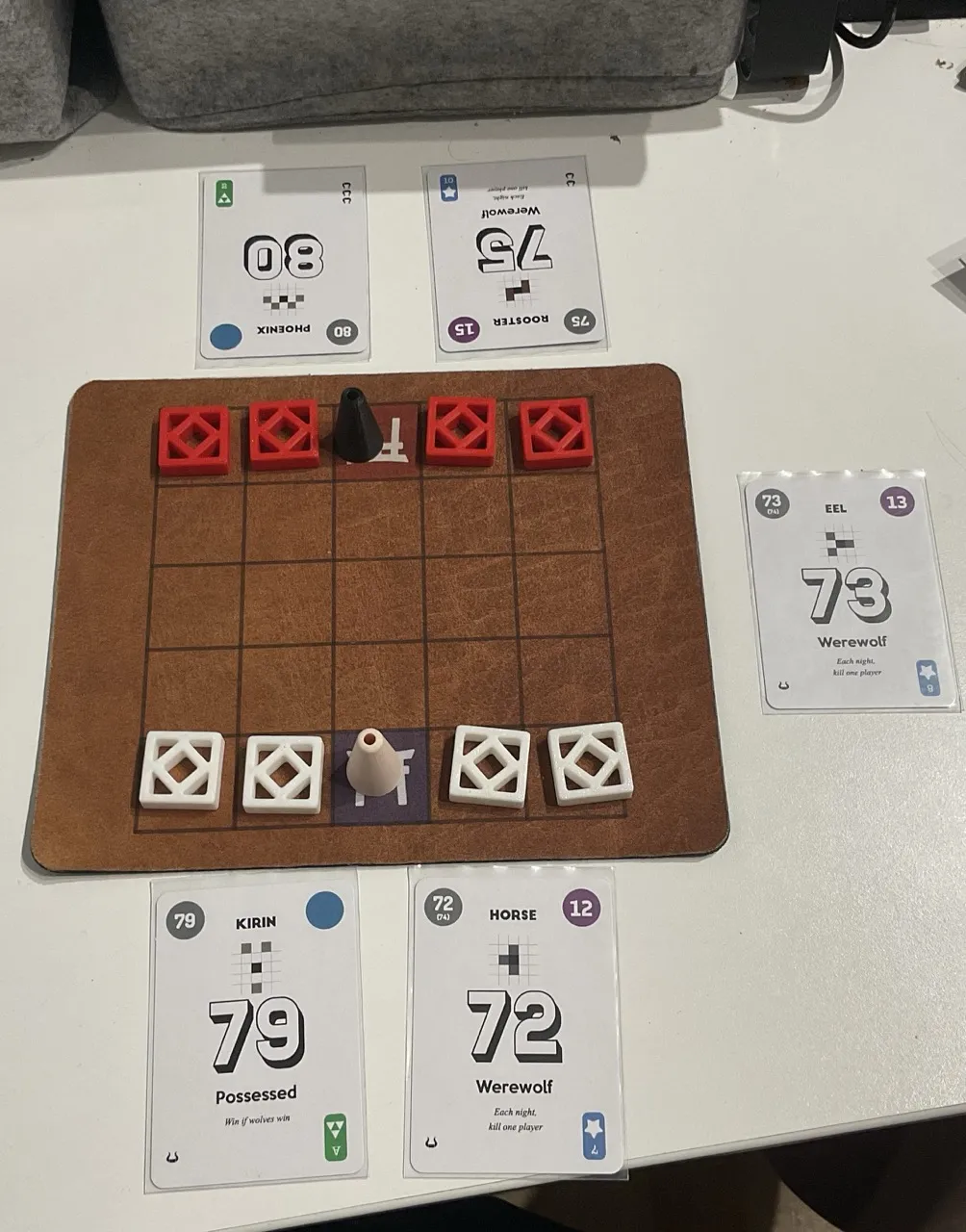
When I was building Potluck, I included Onitama moves into the cards and allowed a small printed playmat with a 5x5 grid to be the only component outside the deck. The playmat is actually a mousepad that I ordered with a custom image. It folds and fits nicely into my backpack alongside the deck.
For a while, that playmat existed in my bag exclusively for Onitama.
Tak
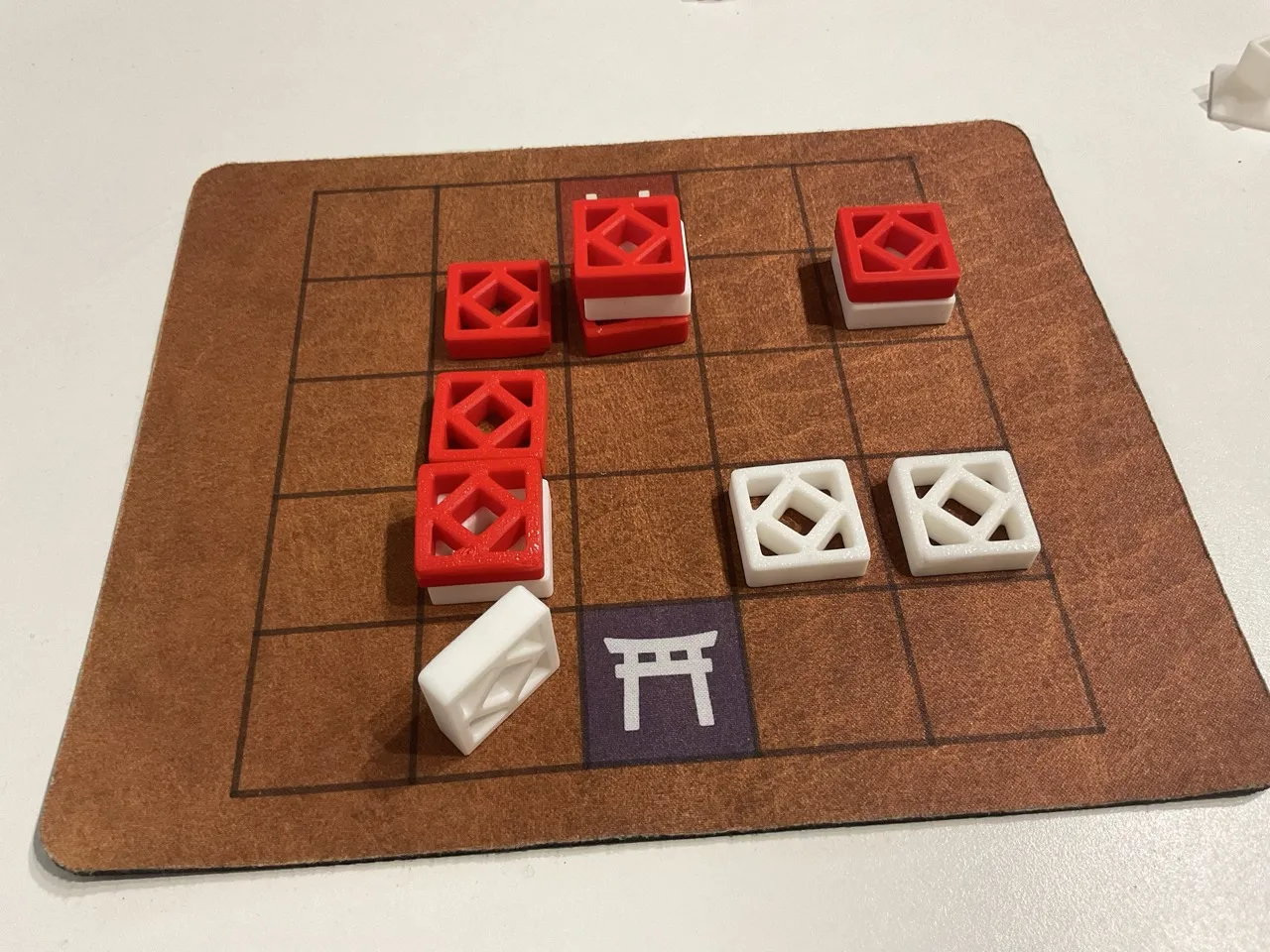
Then I ran into The Modern Rogue’s video about Tak and fell in love with the game. I 3D printed 21 red and 21 white stone and one Capstone in both colours to be played on the same 5x5 grid. By adding Tak, I expanded way beyond the Potluck and its only connection with that project is the playmat.
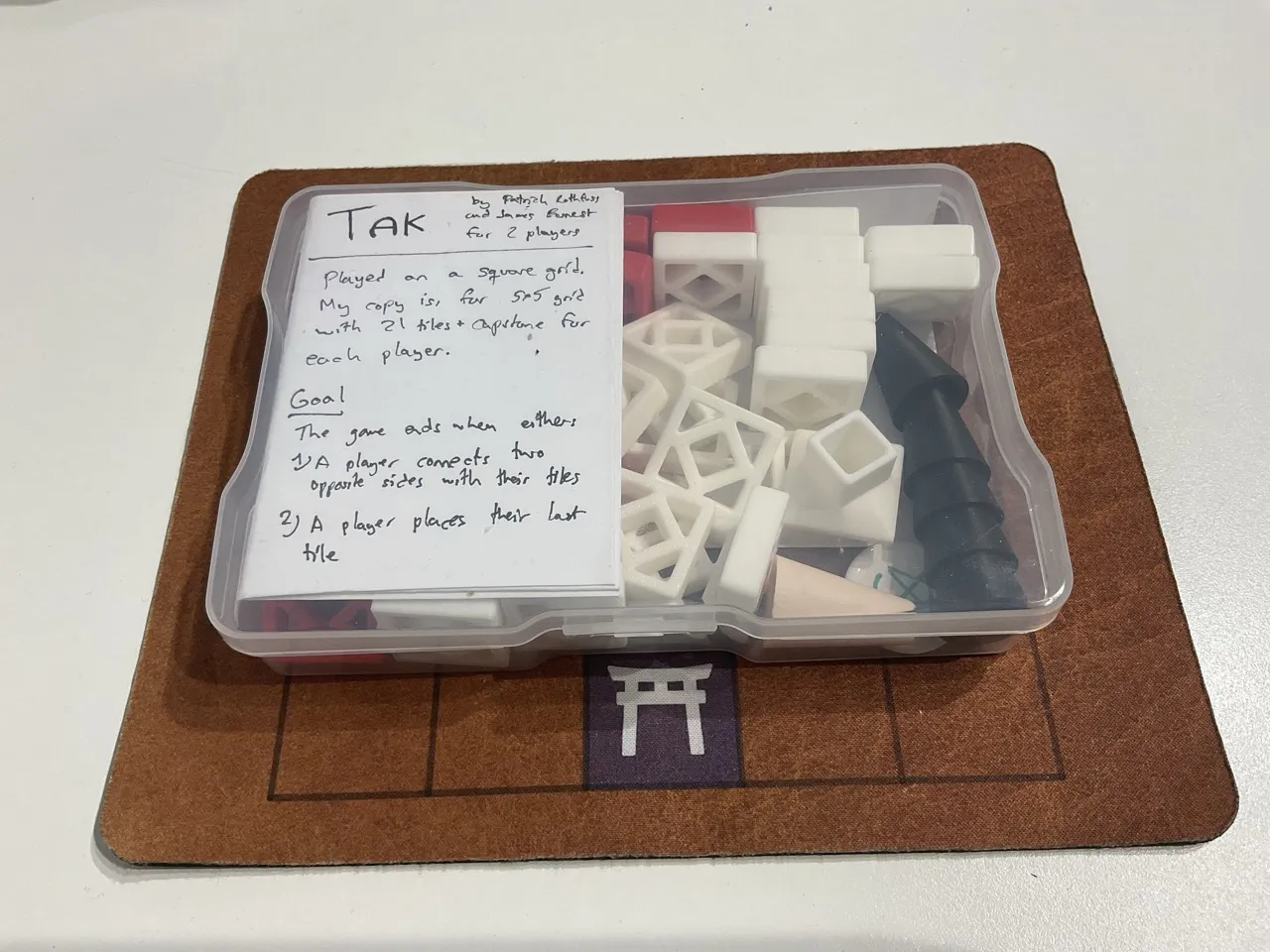
At that point, I was already using clear plastic photo boxes to store small games so I dedicated one for Tak. I wrote the core rules down and put everything into the box.
Surikata
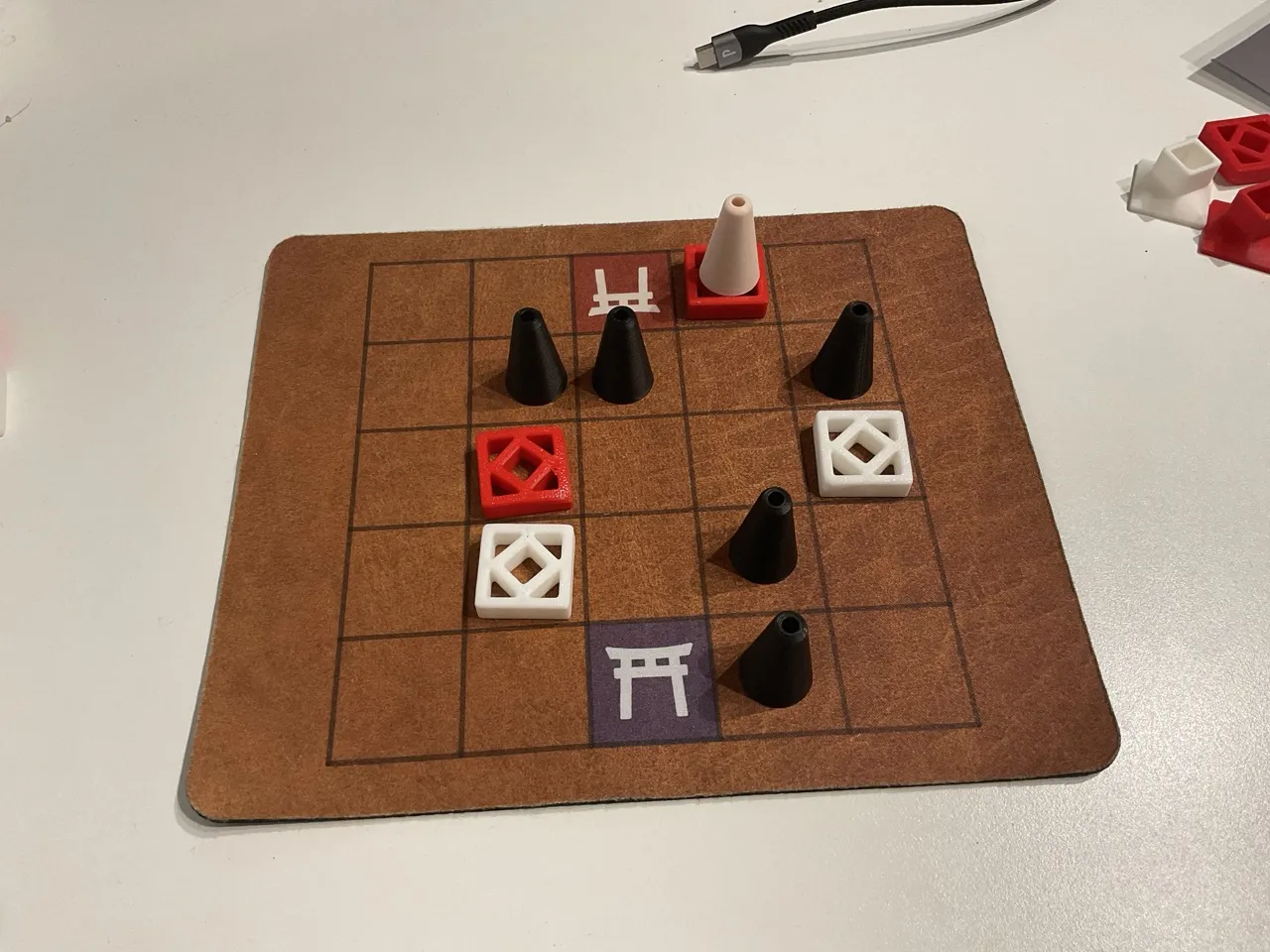
Then I discovered Surikata that is played on the same grid, uses 10 tiles per player and added five termite mounds and one meerkat to what Tak uses.
In Surikata, players start by placing 5 mounds as obstacles on the board and then place their coloured tiles one by one, trying to force their opponent to either create a 3-in-row with their tiles or prevent them for making a legal move. The meerkat climbs on top of the latest played tiles and sees everything in the row and column they are on — but not beyond a mound. A player cannot place a tile in the view of the meerkat.
I already had everything else in the box so I took five black cones and one beige cone from my piecepack and added them to the box.
The designer of the game, Adam Porter, has a nice video where he explains his design process and how that led him to Surikata.
King’s Valley
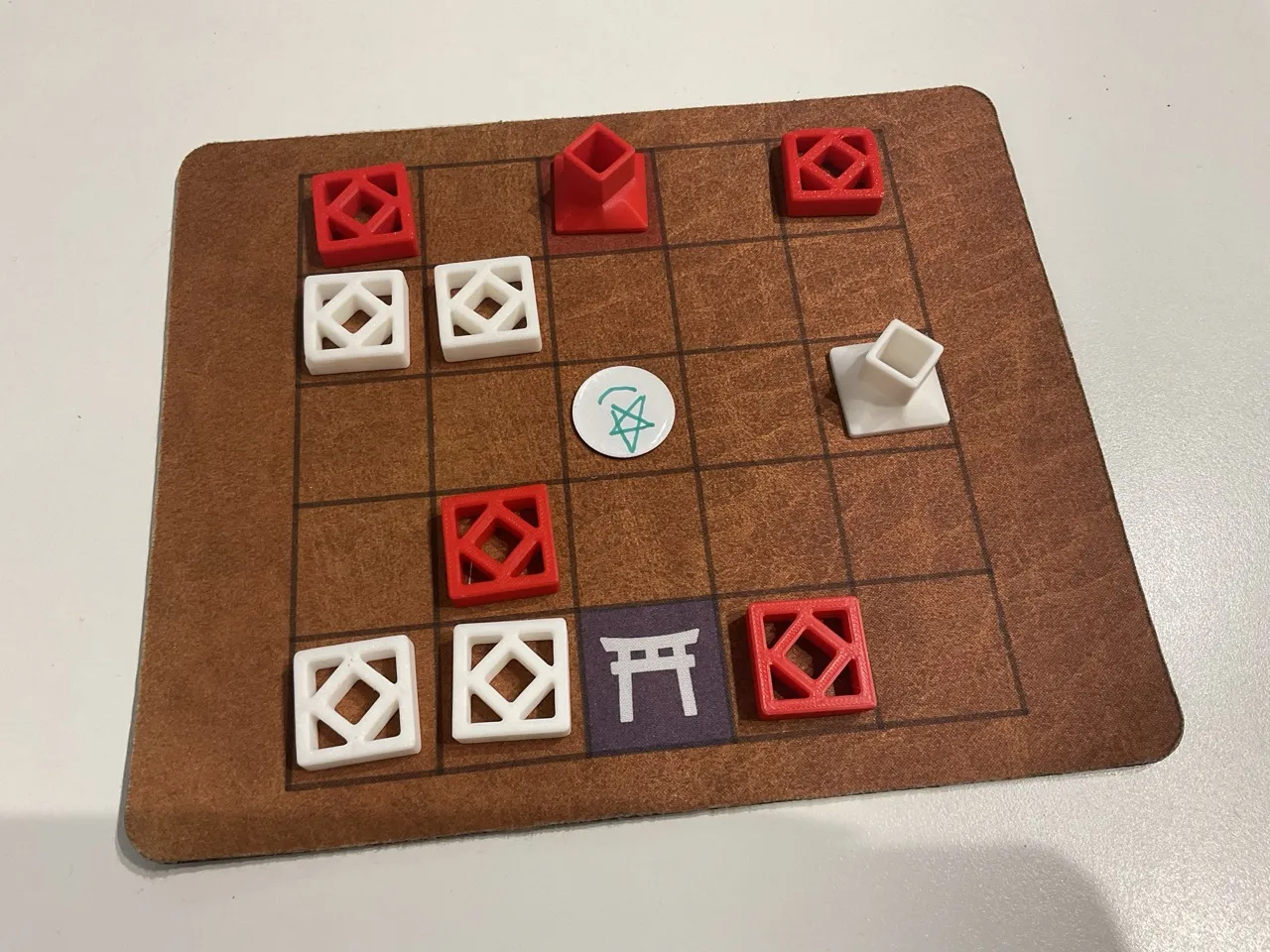
The most recent addition is King’s Valley for which I didn’t really need to add anything but I created a 1” magnet token to remind for the center square’s importance.
It’s similar to Onitama in that each player has a King and four Soldiers. The goal is to get your King to the center square or block your opponent’s King from being able to make a move.
Each piece in the game moves orthogonally or diagonally to any direction but must always go as far as they can move: until they either hit a wall or another piece. It’s a perfect knowledge, zero luck game.
I handwrote small rules zines to keep in the box. Every time I discover a new game that can be played on a 5x5 grid with little to no component additions, I add it to the box and write additional rules.