Wingspan Pocket
Official Wingspan Pocket is coming in October 2026 and it’s gonna be a different game within the Wingspan family. This note is about taking the original full game and reducing its components into a smaller footprint.
I love Wingspan but the regular version of it is a BIG BOX with tons of tokens. This note is my design document for exploring options to turn it into a more travel size version.
This is still work-in-progress and I haven’t attempted to put one together or play with these ideas yet.
Ultimate Guard Sidewinder 133+ fits 280 unsleeved cards. Since we eventually will have 219 cards + a bit, we should be able to fit a token box there too.
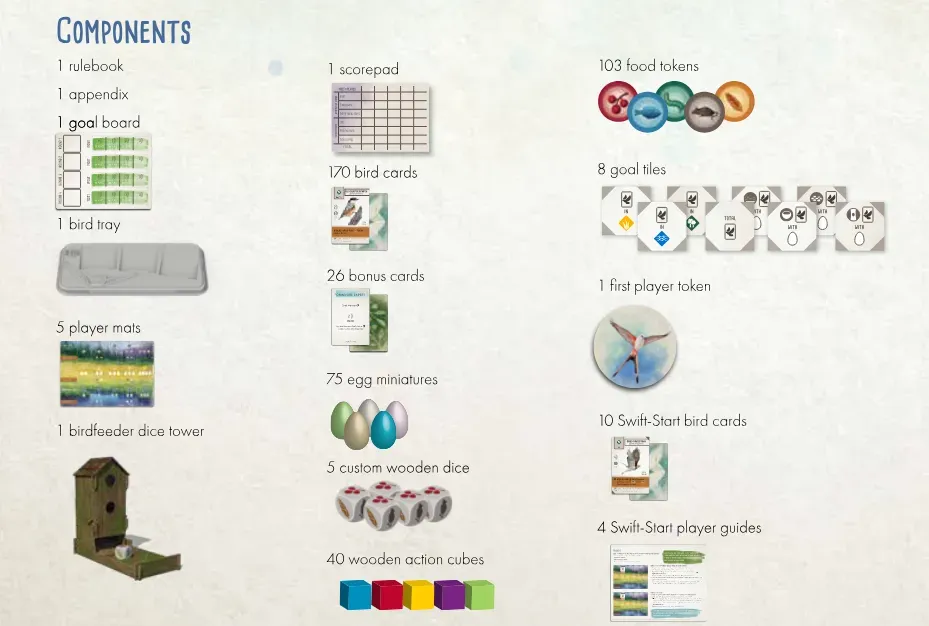
You can leave out
- Rulebook
- Appendix
- Bird tray
- Birdfeeder
- Scorepad
- Food tokens
- 1st player token
- Player guides
- Action cubes
This leaves us with
- Player mats
- 170 Bird Cards + 10 Swift-Start cards
- 26 Bonus Cards
- 75 eggs
- 5 custom dice
- 8 goal tiles
to work with.
Player mats
We can translate large player mats into 3 cards x 5 players = 15 cards. in similar way than I’ve done with Draftosaurus. These won’t operate as a “player board” anymore but rather a guide/player aid.
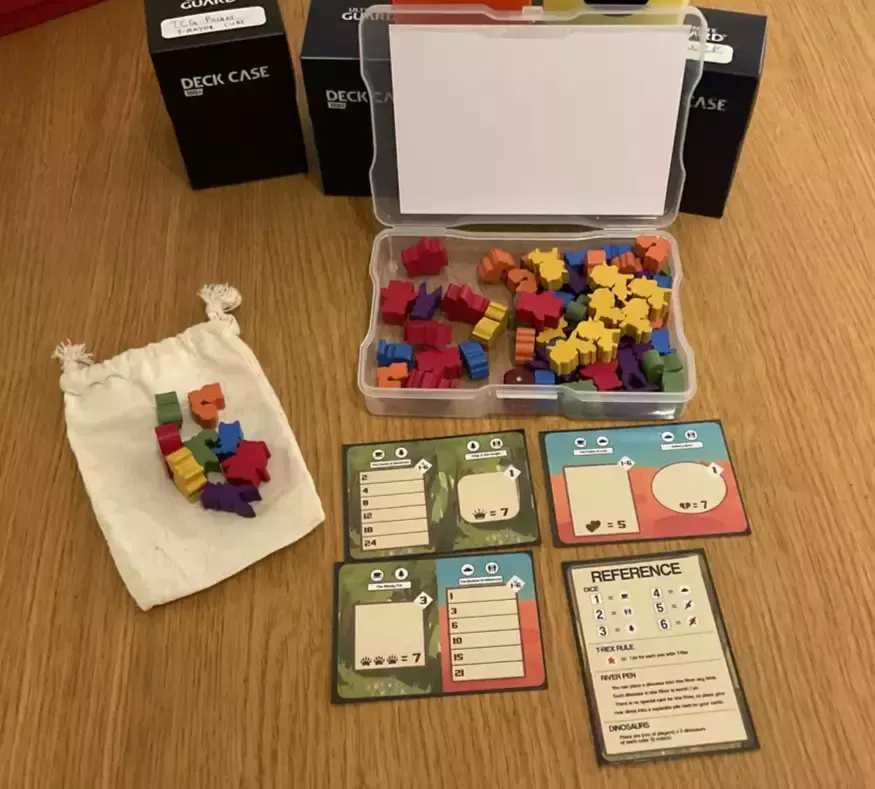
When I started doing that, I copied the player mat as the basis and realised: since I won’t be playing anything there anyway, why not just print card-sized player mats for reference?
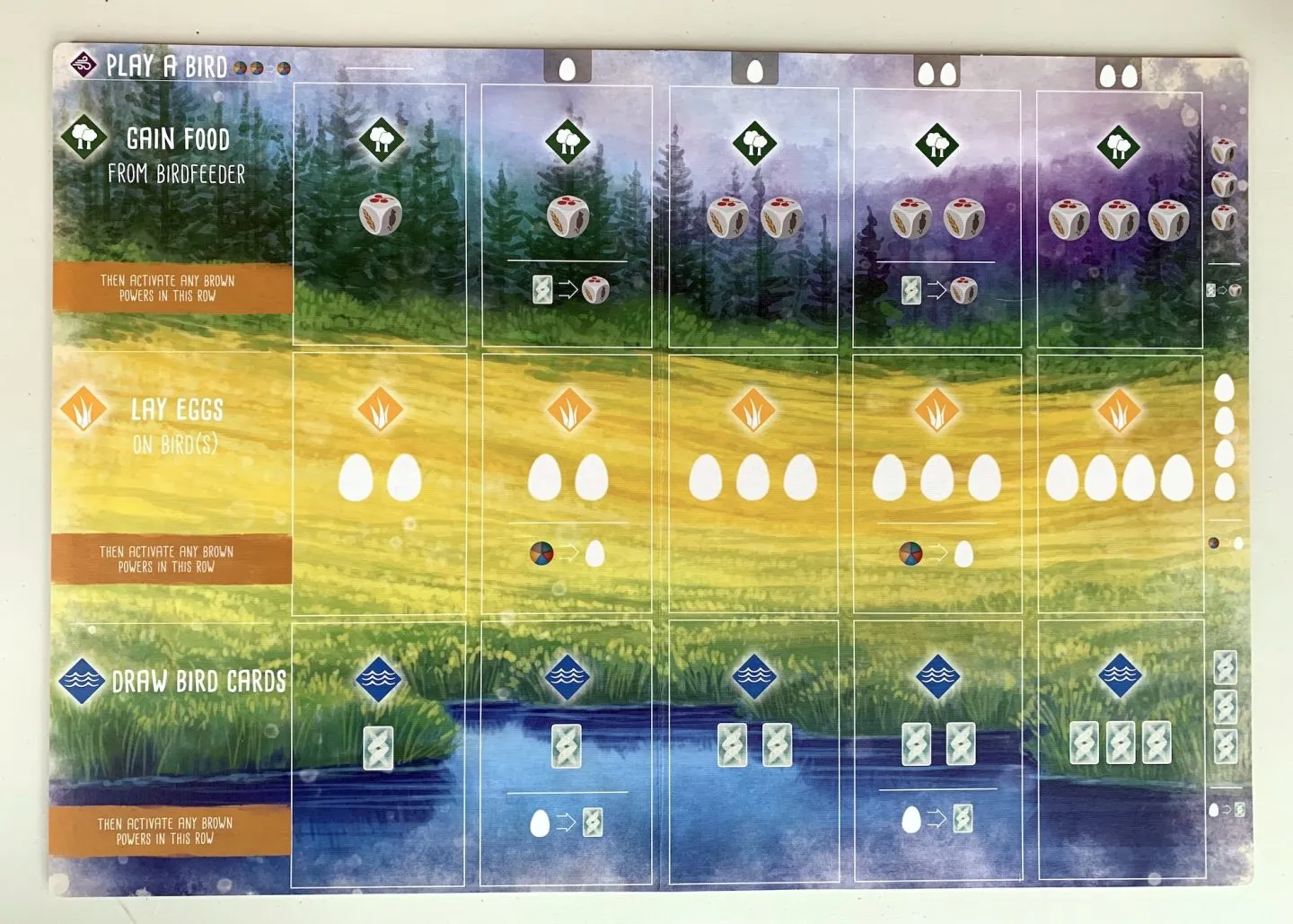
This would give us 5 cards instead of 15.
Eggs
We can create small, flat tokens (or use the food token from the game as eggs) to save space. Also, 75 sounds like a lot to have so maybe we can slim it down to, say 50 (10 per player) token.
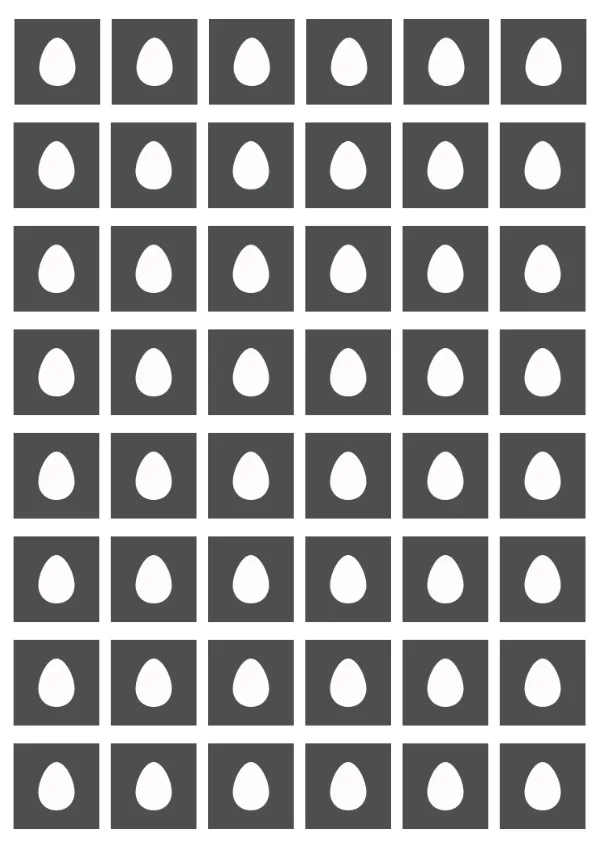
After a bit of exploring, I found out that 1” tokens are really good and even 75 of them barely takes any space. I could print out a sheet of egg icons, glue it on a thin card board (like cereal box) and then cut out with my cutter.
One cool idea could be to store the egg tokens in one of my 3D printed dice boxes so it could be used for both storage and tray when playing. And those already fit perfectly into deck boxes.
Alternatively, I could use the food tokens from the game and treat them all as eggs.
An A4 page fits 48 tokens. The grey squares are bit over 1” so there’s some wiggle room when cutting them out with a 1” hole punch. 2 pages will give us enough for the game.
Action cubes (or lack of them)
Action cubes are only used to mark how many actions you have left. They can be left out and use another way of keeping track (like pen & paper / tablet). 5 x D8 might be too much though but also an option.
Cards
Bird and Bonus cards pretty much need to come as-is. That’s a total of 221 cards.
8 goal tiles should be converted to cards. That’s a total of 229 cards now.
Tracking food resources
For tracking food resources, instead of having 100+ tokens, I’m thinking about either using dry erase cards to keep track or to create a bit thicker cards, and cut out holes for a small dice for each resource. That would add 5 (resource types) x 5 (players) = 25 small (10 or 12 mm) dice and 5 thick cards. There’s also an option of having 1 of each token per player and use a tracker like this.
My first idea for the food tracker would be something like this printed in card size:
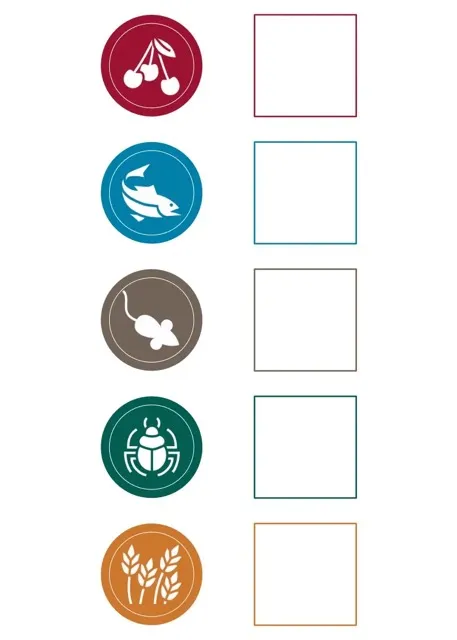
(credits: mouse, insect and wheat by Loic, cherry by Delapouite and salmon public domain, all from game-icons.net)
The idea would be to have a 12mm D6 for each of those values to track how much food the player has.
One unsolved question still is how would I deal with caching food to birds?
Other notes
I could also cut 20% of everything (except cards) by only making it playable by 4 players since it’ll be rare to play with five anyway most of the time.
To play, I’d also need a dice tray to make clear which food dice are still in and which have been taken out.
Final tally, v1
- 15 cards for player mats
- 180 bird cards
- 26 bonus cards
- 8 goal cards
- 5 dice to roll for resources
- 25 small dice with 5 resource tracking cards
- or 5 dry erase cards and some markers
= 229 cards and 30 dice