In Timberborn, one way to combat against the negative effects of droughts to your food production is to form local 3x3 ponds that can irrigate your fields 16 tiles each way.
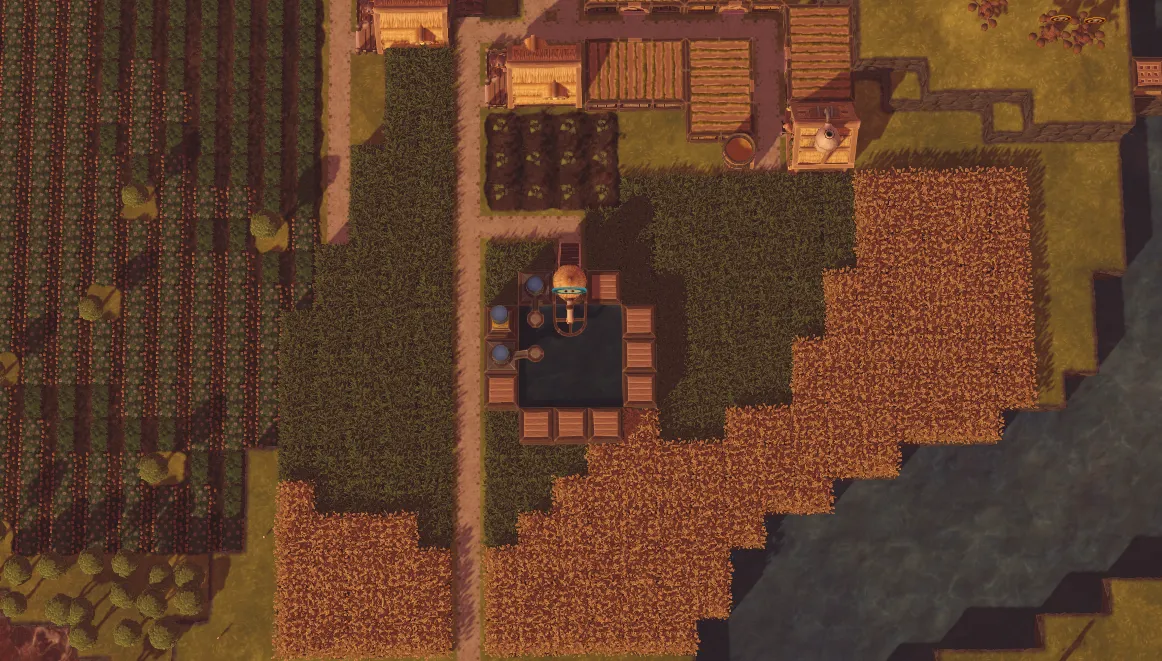
An automated local pond consists of
- 12 Levees that form a 3x3 pond
- A Discharge
- Two Depth Sensors
- A Memory
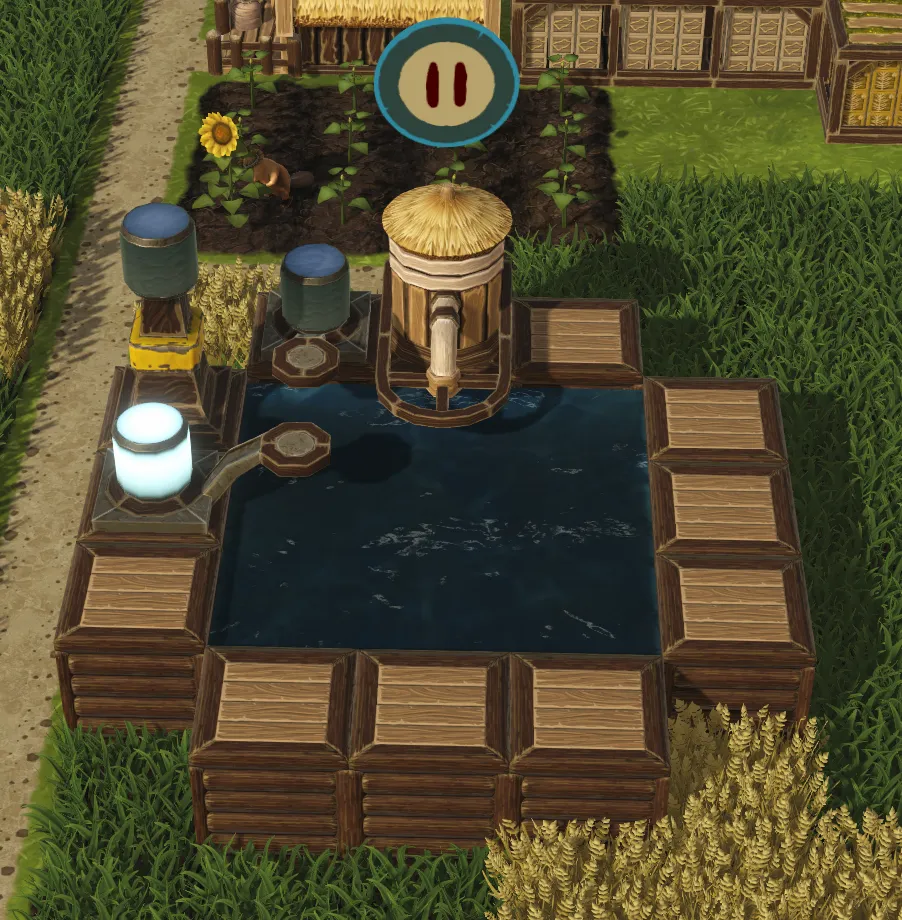
To free up labour, we automate the pump to only work on short bursts when the pond is about to empty out.
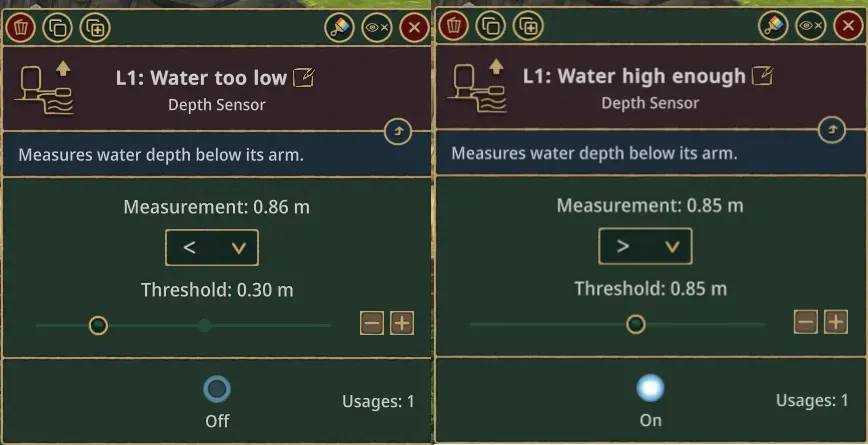
First Depth Sensor is set to a Threshold: < 0.30m and indicates when the beaver should start working.
If we only use one sensor, the beaver will work for a second to get the water level above 0.30, then leave and a few seconds later need to return. To prevent this, we need another sensor and a Memory.
Second Depth Sensor is set to a Threshold > 0.85m to indicate the pond has been filled. A single tile deep pond will only fill up to around 0.88m so 0.85m is the highest threshold we can use.
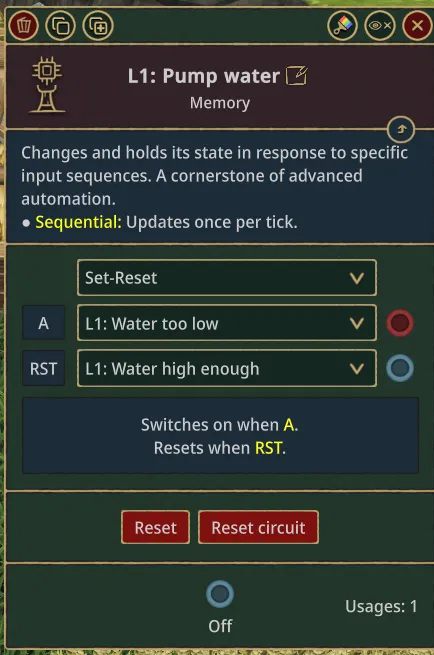
A Memory is used in a Set-Reset mode where it activates when the water goes too low and resets or deactivates when the water is high enough again.